
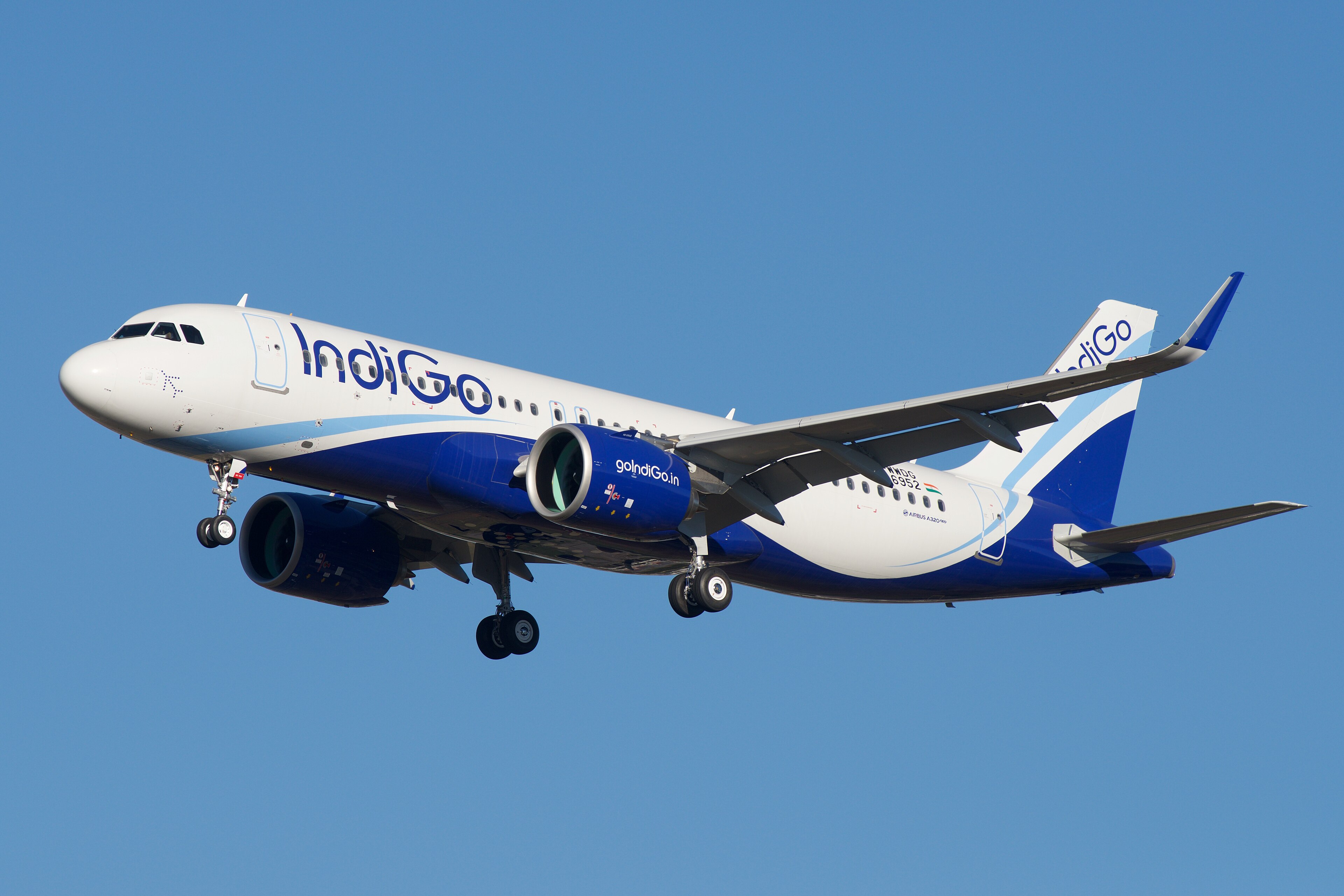
Airbus A320
Europe's defining narrow-body — the fly-by-wire twinjet that changed airliner design.
History & background.
The Airbus A320 was a watershed moment in commercial aviation when it entered service in 1988. It was the first short- to medium-range airliner to use full fly-by-wire flight controls — a system where a computer interprets pilot inputs and moves the control surfaces, with software-enforced flight envelope protection preventing the aircraft from being flown outside safe limits. That philosophy, along with the distinctive sidestick controllers, set Airbus’s design language for decades.
The A320 family — spanning the A318, A319, A320, and A321 — has grown into the world’s best-selling commercial aircraft program, with over 15,000 orders by 2026. The current A320neo (New Engine Option) variant, fitted with CFM LEAP-1A or Pratt & Whitney GTF engines, delivers roughly 20% lower fuel burn than the original A320ceo, making it the preferred choice for fuel-conscious operators worldwide.
One of the A320’s less-obvious innovations is its standardised cockpit across the entire family. A pilot rated on the A320 can, with a short difference course, fly the larger A321 or smaller A318 — a commonality that dramatically reduces airline training costs. This type-rating flexibility has been a key commercial advantage over competing programmes.
Specifications & performance.
| cruise speed | 833 km/h (Mach 0.78) |
| engine | 2× CFM LEAP-1A or PW1100G (120 kN each) |
| first flight | February 22, 1987 |
| length | 37.57 m |
| max speed | 903 km/h (Mach 0.82) |
| mtow | 79,000 kg (A320neo) |
| range | 6,300 km (A320neo) / 5,700 km (A320ceo) |
| seating | 150–180 passengers (typical) |
| service ceiling | 12,100 m (39,800 ft) |
| status | In service (1988–present) |
| wingspan | 35.8 m (sharklet tip) |