
Boeing 777
The twin-engine widebody that made ultra-long-haul routes viable for two engines.
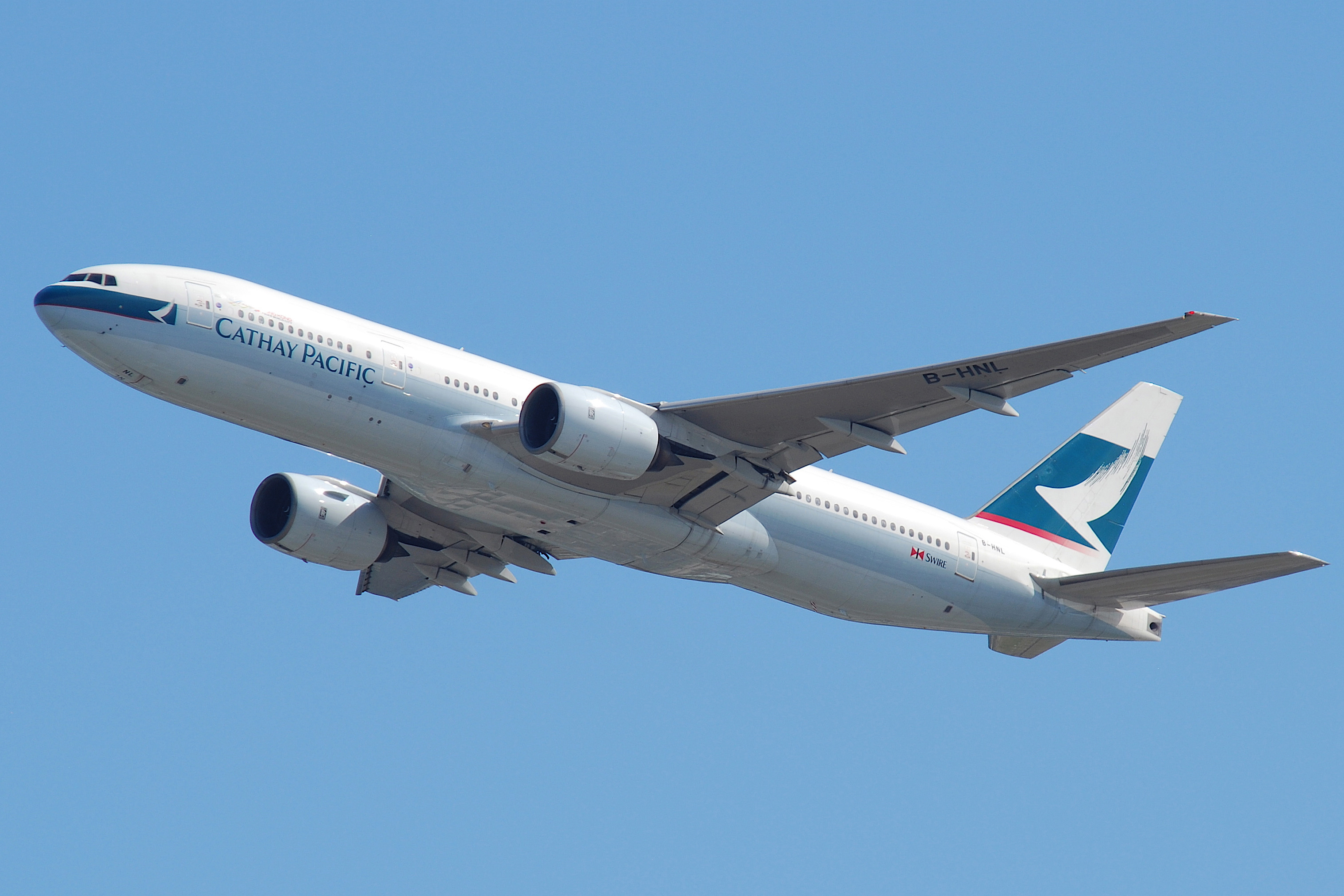
History & background.
When Boeing launched the 777 in 1990, the dominant wisdom was that ultra-long-haul over-water routes required four engines for safety. The 777 challenged that convention head-on. Certified for 180-minute ETOPS from the moment it entered service in 1995 — the first aircraft to achieve that distinction — the 777 proved that two correctly maintained engines could be trusted across the Pacific and Atlantic without diversion airports within easy reach.
The 777-300ER is the flagbearer of the family: a 73.9-metre twin with two GE90-115B engines, each producing 513 kN of thrust — the most powerful production turbofan ever built. At maximum takeoff weight, each engine generates more thrust than three 737 engines combined. The aircraft can carry 396 passengers in a two-class layout non-stop from Dubai to Los Angeles or from Singapore to London.
The 777X programme, featuring composite folding wingtips and the GE9X engine, is the successor. The 777X-9 — at 76.7 m the longest airliner ever built — is expected to enter service in the late 2020s, carrying up to 426 passengers over a range of 13,500 km. It represents the final evolution of a design philosophy that proved twin-engine wide-body jets could do everything four-engine jets could — more efficiently.
Specifications & performance.
| cruise speed | 893 km/h (Mach 0.84) |
| engine | 2× GE90-115B (513 kN each) |
| first flight | June 12, 1994 |
| length | 73.9 m (777-300ER) |
| max speed | 905 km/h (Mach 0.84) |
| mtow | 352,441 kg (777-300ER) |
| range | 13,649 km (777-300ER) |
| seating | 396 passengers (2-class 777-300ER) |
| service ceiling | 13,140 m (43,100 ft) |
| status | In service (1995–present) |
| wingspan | 64.8 m |