
Lockheed Martin F-16 Fighting Falcon
The world's most widely operated supersonic fighter — over 4,600 built across 25+ nations.
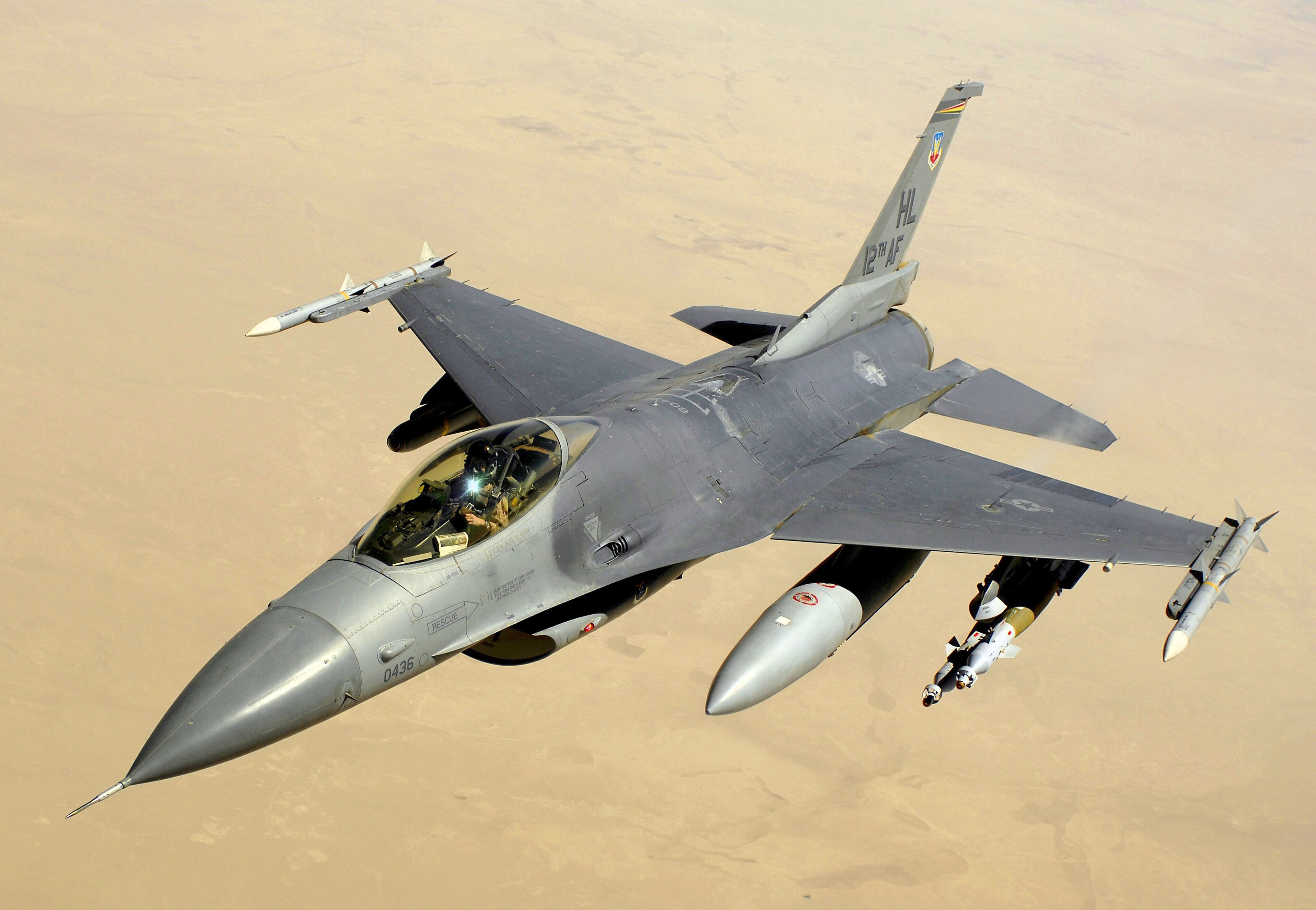
History & background.
The General Dynamics (now Lockheed Martin) F-16 Fighting Falcon is the most prolific supersonic combat aircraft in history. Developed in the early 1970s from a Lightweight Fighter competition intended to complement the F-15 Eagle, the F-16 became the dominant export fighter of the Western world. More than 4,600 have been built for over 25 air forces, and the type remains in active production in the 21st century in its Block 70/72 configuration.
The F-16 introduced several features that are now standard in modern fighters: a relaxed static stability design (the aircraft is inherently unstable and requires constant fly-by-wire correction to maintain straight flight), a reclined ejection seat at 30 degrees to increase pilot g-tolerance, and a frameless bubble canopy providing exceptional all-round visibility. The sidestick controller — mounted on the right console rather than between the pilot’s legs — was another departure from convention.
In combat the F-16 has accumulated an impressive record. Israeli F-16s flew the strike on Iraq’s Osirak nuclear reactor in 1981. Pakistani F-16s claimed Indian aircraft in the Kargil War. In the Gulf War, coalition F-16s flew more combat sorties than any other aircraft type. As of 2026, the F-16 remains the export fighter of choice for NATO allies unable or unwilling to fund the more expensive F-35 programme.
Specifications & performance.
| combat radius | 550 km (interdiction mission) |
| engine | 1× GE F110-GE-129 (131 kN with afterburner) |
| ferry range | 4,220 km (with drop tanks) |
| first flight | January 20, 1974 |
| length | 15.03 m |
| max g-load | +9g / −3g |
| max speed | Mach 2.05 (2,173 km/h) at altitude |
| mtow | 19,187 kg |
| service ceiling | 15,240 m (50,000 ft) |
| status | In service (1978–present) |
| wingspan | 9.45 m |