
Mil Mi-8 Hip
The most-produced helicopter in history — serving in over 50 countries since 1961.
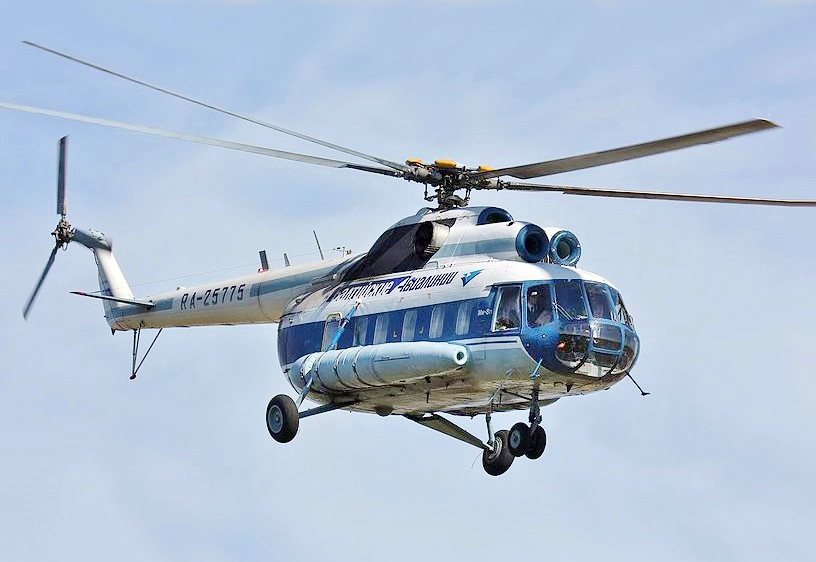
History & background.
The Mil Mi-8 is the most widely produced helicopter in history. First flown in 1961 and entering service in 1967, the Mi-8 has been built in numbers exceeding 17,000 across all variants — more than any other helicopter ever made. It serves in the armed forces and civil aviation of over 50 countries, a reach that reflects both the Soviet Union’s aggressive export policies during the Cold War and the aircraft’s genuine operational versatility.
The Mi-8’s design is deceptively simple: a large-diameter five-blade main rotor, a tail rotor on a conventional empennage, and a slab-sided fuselage providing a cabin volume roughly equivalent to a medium truck. The twin Klimov TV3-117 turboshaft engines deliver ample power for a 13,000 kg helicopter, enabling operations at altitudes up to 4,500 m and in the extreme cold of Siberia where temperatures reach -50°C. The aircraft’s reliability in these conditions is legendary — Afghan mujahideen armed with Stinger missiles found the Mi-8 a harder target than they expected due to its ability to absorb hits and continue flying.
The Mi-8’s combat record spans from the Soviet war in Afghanistan to conflicts in Syria, Libya, and Ukraine. The Mi-8AMTSh assault transport variant, fitted with stub wings carrying rockets, gun pods, and anti-tank guided missiles, blurs the line between transport and attack helicopter. The Mi-17, a widely exported development with more powerful engines and uprated transmission, is operated by over 60 nations including India, China, and several NATO partner countries.
Specifications & performance.
| cruise speed | 225 km/h |
| engine | 2× Klimov TV3-117VM (1,454 kW each) |
| first flight | 1961 |
| length | 25.24 m (fuselage with rotor) |
| max speed | 260 km/h |
| mtow | 13,000 kg |
| payload | 28 troops, or 4,000 kg internal, or 3,000 kg sling |
| range | 450 km (standard) / 950 km (with auxiliary tanks) |
| rotor diameter | 21.29 m |
| service ceiling | 4,500 m (14,764 ft) |
| status | In service (1967–present) |