
Lockheed SR-71 Blackbird
The fastest air-breathing aircraft ever built — so fast, it outran the missiles fired at it.
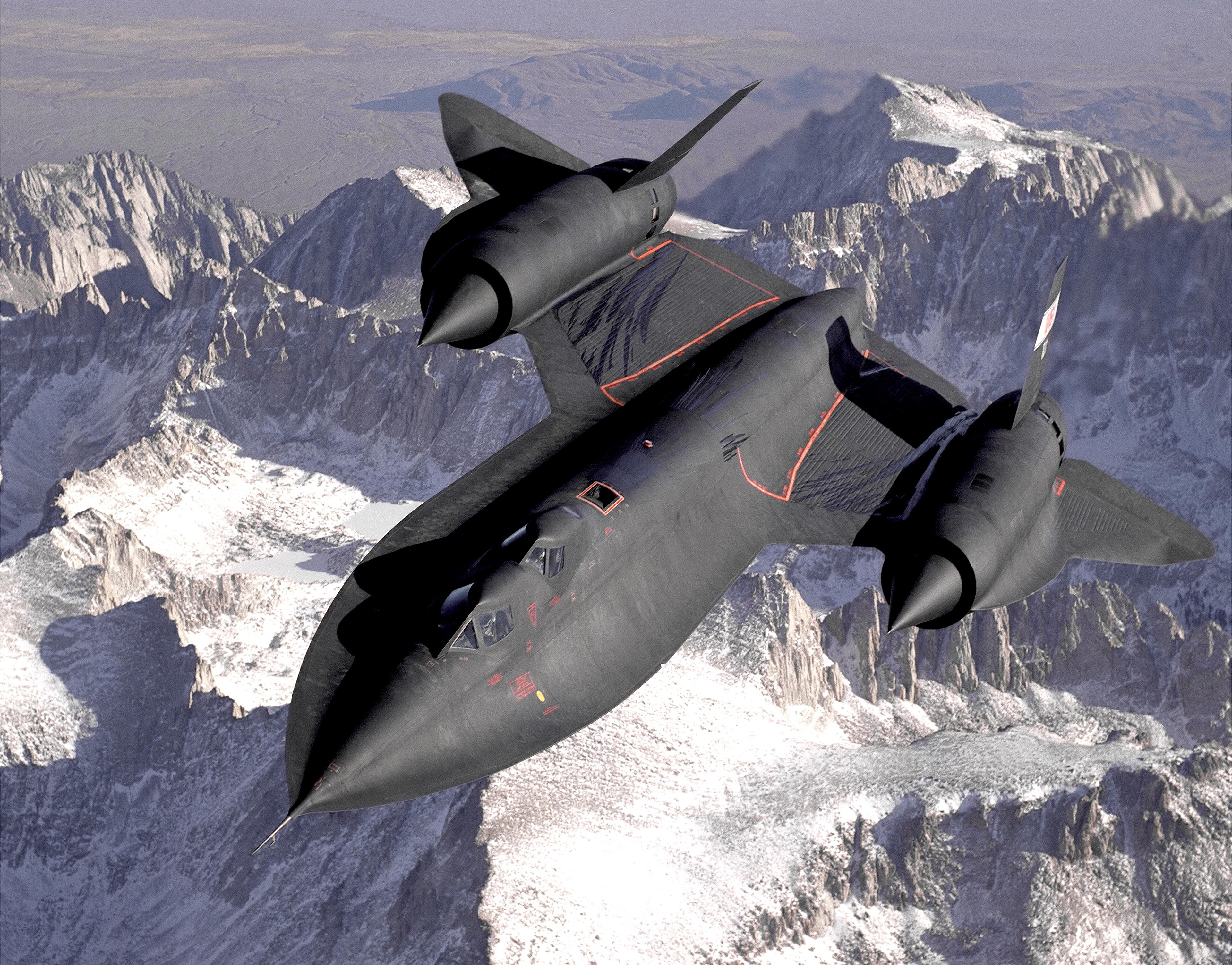
History & background.
The Lockheed SR-71 Blackbird holds the absolute world speed record for an air-breathing aircraft: Mach 3.3 (3,529 km/h), set on July 28, 1976. Designed under absolute secrecy by Lockheed’s Skunk Works division under Kelly Johnson, the SR-71 was a strategic reconnaissance aircraft so fast that its standard defensive tactic against surface-to-air missiles was to simply outrun them. Throughout its 24-year operational career (1966–1990, with a brief return 1994–1998), no SR-71 was ever shot down by a hostile missile.
Building an aircraft to cruise at Mach 3.2 required solving engineering problems that had no precedent. At that speed, aerodynamic friction heats the airframe to over 320°C — too hot for the aluminium used in virtually all other aircraft. The SR-71 was therefore built primarily of titanium, which accounted for 93% of the airframe by weight. This created a new problem: the Cold War US had very limited domestic titanium supplies and had to acquire the metal, often through intermediaries, from the Soviet Union — the same country the SR-71 was designed to spy upon.
The aircraft’s fuel, JP-7, was a specially formulated kerosene so stable it could not be ignited by a match at sea level. It was also used as a heat sink, circulating through the airframe to absorb aerodynamic heat before being burned in the engines. On each mission, the SR-71 burned approximately 130,000 litres of fuel and required air-to-air refuelling shortly after takeoff — the aircraft’s fuel tanks leaked on the ground because the titanium panels were designed with gaps that sealed only when the airframe expanded to operating temperature in flight.
Specifications & performance.
| cruise speed | Mach 3.2 (3,400 km/h) |
| engine | 2× Pratt & Whitney J58 continuous-bleed turbojet (151 kN each with afterburner) |
| first flight | December 22, 1964 |
| fuel | JP-7 (approx. 46,180 kg per mission) |
| length | 32.74 m |
| max speed | Mach 3.3+ (3,540 km/h) — air-breathing world record |
| mtow | 77,111 kg |
| range | 5,400 km (unrefuelled) |
| service ceiling | 25,900 m (85,000 ft) |
| status | Retired (1998); 4 airframes on public display |
| wingspan | 16.94 m |